
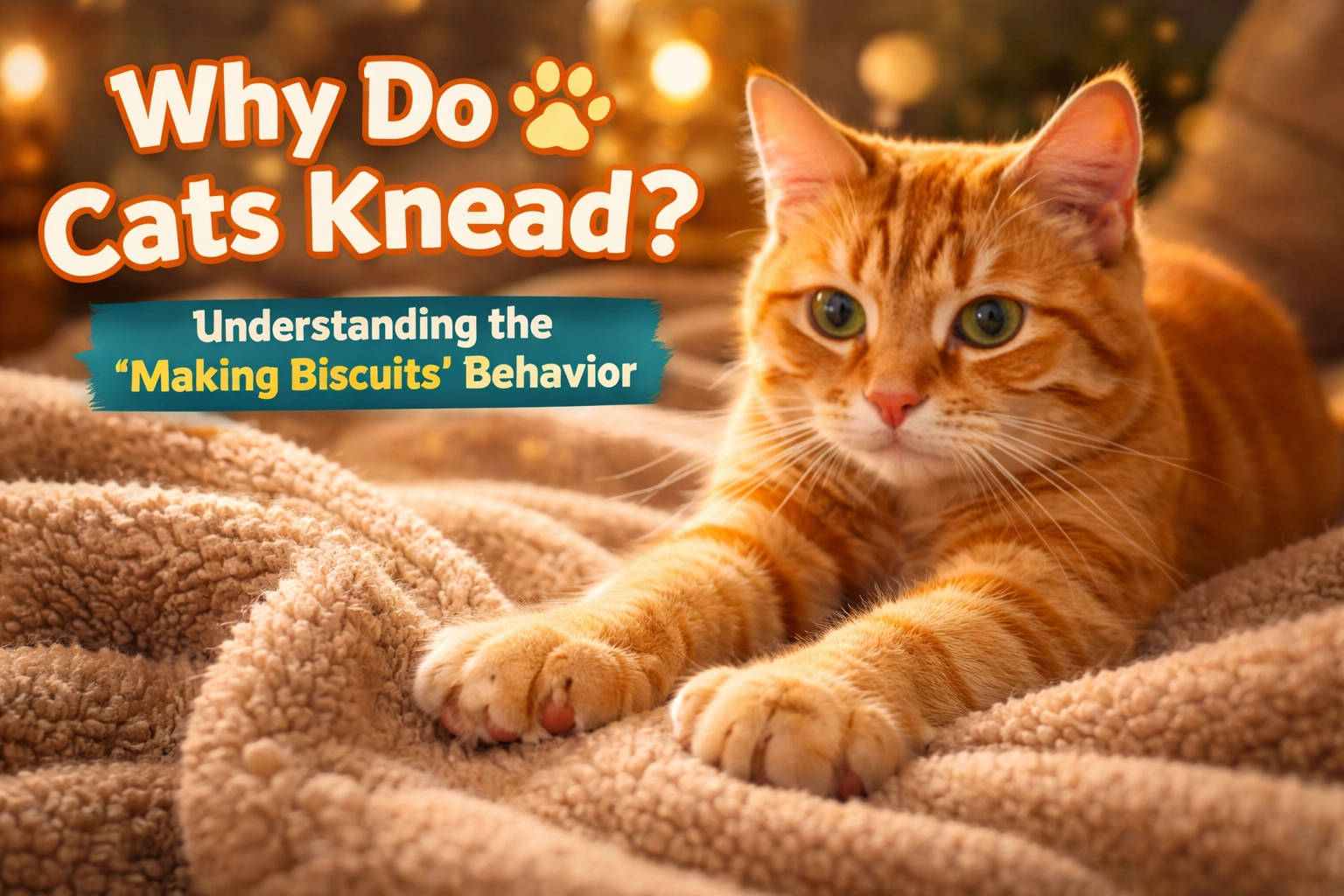
If you've ever watched your cat rhythmically push their paws into a blanket, pillow, or even your lap, you've witnessed one of the cutest cat behaviors out there. Cat lovers call it "making biscuits" because it looks like your furry friend is kneading dough. But why do cats do this? And what does it mean when your cat decides to turn you into their personal bread station?
Let's dive into the adorable world of cat kneading and find out what's really going on in that fuzzy little head.
What Exactly Is Cat Kneading?
Kneading is a rhythmic pushing motion cats make with their paws. They alternate between their left and right paw, pressing down and pulling back in a steady pattern. Some cats use all four paws, while others stick to just the front two. Some extend their claws during the process (ouch for your lap!), while others keep them retracted.
You'll often notice your cat kneading on soft surfaces like blankets, pillows, stuffed animals, or your favorite sweater. Many cats also knead on their humans: which is actually a big compliment, even if those tiny claws don't feel like one.

It All Starts in Kittenhood
To understand why adult cats knead, we need to go back to when they were tiny kittens. Baby cats knead their mother's belly while nursing. This pressing motion helps stimulate milk flow so they can eat. It's one of the first behaviors kittens learn, and it's directly tied to feelings of comfort, warmth, and a full belly.
Even though your adult cat no longer needs to nurse, the kneading behavior sticks around. It's hardwired into their brain as something that feels good and safe. When your cat kneads, they're tapping into those early memories of being cozy and cared for.
Some cats take this even further. You might notice your cat suckling on a blanket or piece of clothing while they knead. This is completely normal and just shows how strongly connected kneading is to those nursing instincts.
5 Reasons Your Cat Kneads
So what triggers an adult cat to start making biscuits? There are actually several reasons, and they're all pretty sweet.
1. They're Feeling Happy and Relaxed
The number one reason cats knead is because they're content. When your cat curls up on the couch, starts purring, and begins that rhythmic paw motion, it means they're in a good place emotionally. Kneading releases dopamine (the feel-good chemical) in their brain, so it's basically their way of saying "life is good right now."
You might notice your cat gets almost hypnotized when they knead. Their eyes go half-closed, they purr like a little motor, and they seem completely zoned out. That's the relaxation hitting hard.

2. They're Marking Their Territory
Here's something cool you might not know: cats have scent glands between their toes and on their paw pads. When they knead, they're actually depositing their unique pheromones onto whatever surface they're working on.
This is your cat's way of saying "this is mine." When they knead your lap, they're marking you as part of their territory. It's a sign of ownership and familiarity. Basically, your cat is telling the world that you belong to them. (Let's be honest, they're probably right.)
3. They're Nesting
Wild cats: the ancestors of your couch potato: would knead grass and vegetation to create comfortable sleeping spots. They'd pat down the area to make it soft and check for any hidden dangers like snakes or insects.
Your domestic cat still has this instinct, even though the most dangerous thing in their bed is probably a rogue sock. When you see your cat kneading their sleeping spot before settling down, they're following an ancient ritual passed down through generations.
4. They're Showing You Love
When your cat kneads on you specifically, take it as a major compliment. By performing the same behavior they did with their mother as a kitten, your cat is showing that they feel safe and secure with you. They trust you completely.
Kneading on their favorite human is one of the ways cats express affection. Combined with purring and slow blinks, it's basically your cat saying "I love you" in cat language.

5. They're Stretching
Cats are flexible creatures who love a good stretch. Some experts believe that kneading helps cats work out tension in their muscles and keep their paws and legs limber. It's like a mini yoga session for your feline friend.
If you watch closely, you might notice your cat stretching their toes wide as they knead. This helps keep their claws in good shape and their paw muscles strong.
Why Does My Cat Knead Me and Not the Blanket?
If your cat specifically seeks you out for their kneading sessions, it means you're their favorite spot. Cats are picky about where they make biscuits. They choose surfaces (and people) that make them feel most comfortable and safe.
Being chosen as your cat's kneading target is an honor. It means they associate you with all those positive feelings from kittenhood: warmth, security, and love.
Of course, if your cat kneads with their claws out, this honor can come with some discomfort. Here are a few tips to make it more pleasant:
- Keep your cat's nails trimmed regularly
- Place a thick blanket on your lap before cuddle time
- Gently redirect your cat to a nearby pillow or blanket
- Never punish your cat for kneading: they're just showing love

When Should You Worry About Kneading?
For the most part, kneading is totally normal and nothing to stress about. However, there are a few situations where you might want to pay closer attention.
Excessive kneading that seems compulsive or happens way more than usual could be a sign of stress or anxiety. Since kneading releases dopamine, some cats may overdo it when they're trying to self-soothe.
Sudden changes in kneading habits are also worth noting. If your cat never kneaded before and suddenly starts doing it constantly, or if a regular kneader suddenly stops, it might indicate something is off.
Kneading combined with other symptoms like changes in appetite, hiding, aggression, or litter box issues could point to an underlying health problem.
Cats with arthritis or muscle soreness sometimes knead more frequently to relieve tension in their limbs. If your older cat seems to be kneading a lot and also shows signs of stiffness or pain, a vet checkup is a good idea.
When in doubt, it never hurts to consult your veterinarian. They can rule out any medical issues and give you peace of mind.
Embrace the Biscuits
Cat kneading is one of those behaviors that reminds us how special our bond with our feline friends really is. When your cat climbs onto your lap, starts purring, and begins that familiar rhythmic motion, they're telling you that you make them feel safe, loved, and content.
So the next time your cat starts making biscuits: even if their claws are a little sharp: try to appreciate the moment. You've earned the title of your cat's favorite kneading spot, and that's something to be proud of.

Now go give your cat some chin scratches. They've earned it for being so adorably weird.