

Ever wonder why your cat is a social butterfly one minute and a disappearing act the next? Or why some cute cats seem to have a permanent "manager" complex, while others are just happy to be here?
Understanding your cat isn't just about knowing their favorite flavor of tuna. It’s about decoding their unique temperament. Scientists have actually narrowed cat personalities down to five main traits, the "Feline Five." By spending just five minutes observing your cat's body language and reactions, you can unlock a whole new level of cat care and connection.
In this guide, we’re going to break down how to read your cat like a pro. Whether you’re looking for cat tips to make your home more peaceful or want to stay on top of cat health by spotting stress early, decoding their personality is the first step.
The "Feline Five": What’s Your Cat’s Type?
Just like humans have the "Big Five" personality traits, researchers have found that cats generally fall into five categories. Most cats are a mix, but one or two traits usually stand out.
1. The Nervous Nelly (Neuroticism)
Cats high in neuroticism are shy, wary, and easily startled. These are the cats who vanish the moment the doorbell rings or a bag of chips crinkles too loudly.

If your cat is high on the neurotic scale, they aren't being "mean" or "rude" when they hide, they are genuinely anxious.
- Decoding clue: They often have their tail low or tucked, and their ears might twitch at every sound.
- Pro tip: Provide plenty of hiding spots. Vertical space like cat trees or shelves helps them feel safe from "predators" (like the vacuum cleaner).
2. The Curious Explorer (Extraversion)
These are the geniuses of the cat world. Extraverted cats are highly intelligent, inquisitive, and often get into trouble because they’re bored.
- Decoding clue: You’ll find them on top of the refrigerator, opening cabinets, or "helping" you type on your laptop.
- Pro tip: High-extraversion cats need mental stimulation. Puzzle feeders and daily play sessions are essential to prevent them from becoming destructive. If you've ever asked, "Is my cat bored?", and they fit this profile, the answer is likely yes. (Stay tuned for our upcoming deep dive: Is Your Cat Bored?)
3. The Bossy Overlord (Dominance)
Some cats just want to run the show. Dominant cats can be a bit pushy, especially in multi-cat households. They might "bully" other cats away from the food bowl or the best sunny spot on the couch.
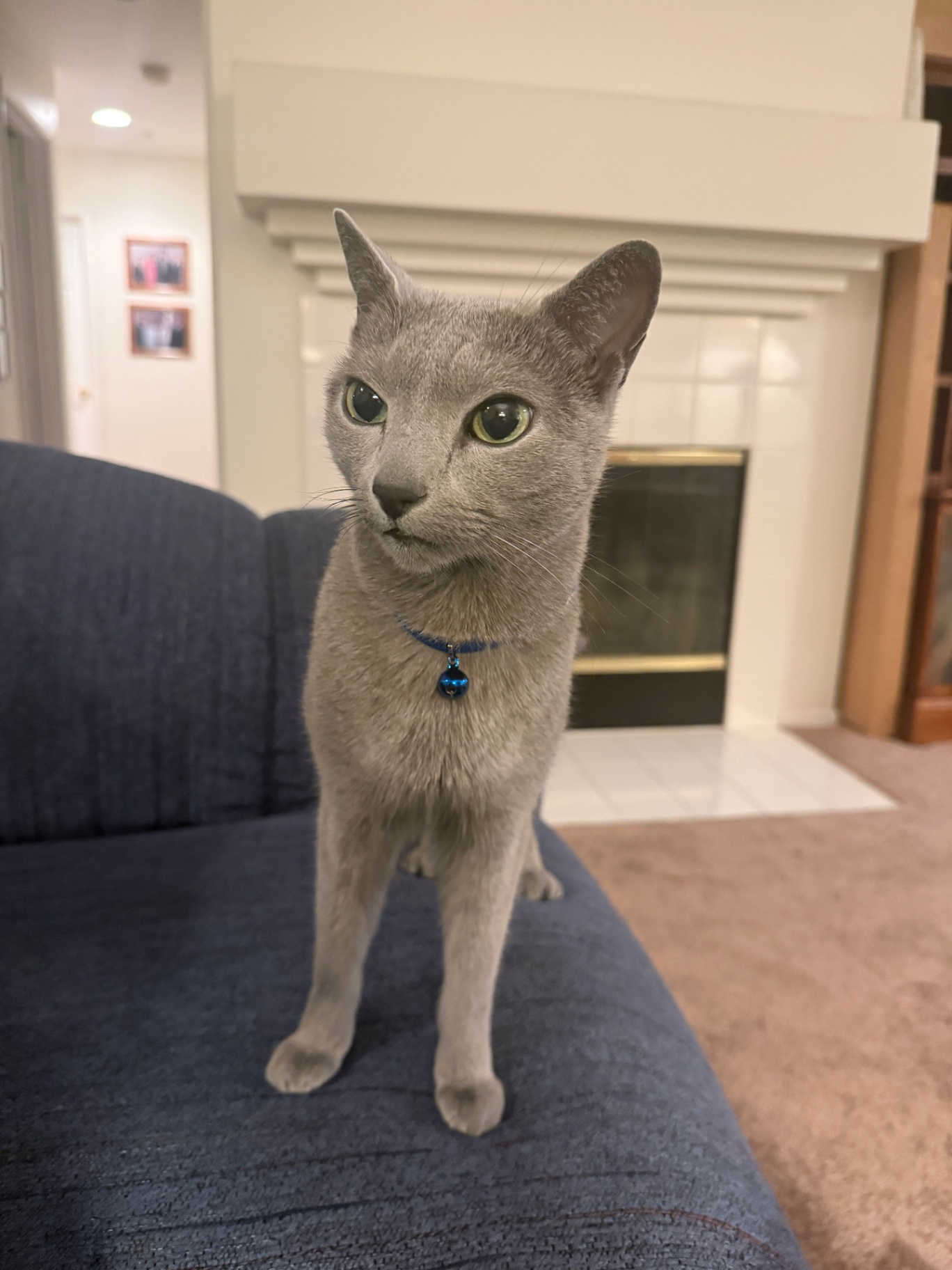
- Decoding clue: They stand tall, stare intently at other pets, and take up space confidently in the middle of a room.
- Pro tip: The secret to managing a dominant cat is resource abundance. Make sure there are more litter boxes and food bowls than there are cats. This reduces the need for them to "guard" their territory.
4. The Wild Card (Impulsiveness)
Does your cat have the "zoomies" at 3 AM? Do they suddenly react to things that aren't there? Impulsive cats show erratic behavior shifts.

- Decoding clue: Rapid changes in energy. One second they are grooming, the next they are sprinting across the room for no apparent reason.
- Pro tip: While often funny, high impulsivity can sometimes be a sign of stress. Maintaining a strict routine for feeding and play can help ground a "wild card" cat.
5. The Sweetheart (Agreeableness)
This is the "dream cat" for many, friendly, relaxed, and loves everyone. Agreeable cats are well-adjusted and typically enjoy being handled and cuddled.
- Decoding clue: They approach strangers with a vertical tail, offer slow blinks, and purr almost as soon as you look at them.
- Pro tip: These cats are great, but don't take their easygoing nature for granted. Even the most agreeable cat needs regular cat grooming and health check-ups.
The 5-Minute Body Language Decoder
If you don't know your cat's "Feline Five" profile yet, you can learn a lot just by watching their physical cues. Here is the "cheat sheet" for the next five minutes you spend with your cat.
The Tail: The Mood Barometer
- Straight Up (with a hook): "I'm happy and confident! Let's hang out."
- Low/Tucked: "I'm scared or feeling unwell." This is a big signal for cat health, if the tail stays low for days, a vet visit might be in order.
- Whippy/Thumping: "I'm annoyed. Stop what you're doing."
- Puffed Up: "I'm terrified or ready to fight. Look how big I am!"
The Ears: The Satellite Dish
- Forward: Content and interested.
- Sideways ("Airplane Ears"): Nervous or anxious.
- Flat Back: Angry or very scared. Do not touch!
The Eyes: The Window to the Soul
- The Slow Blink: The ultimate sign of love. It means "I trust you."
- Dilated Pupils: This can mean excitement (playtime!) or fear. Check the tail to know which one it is.
- Constricted Slits: Usually means anger or aggression.

Why Personality Matters for Cat Health
Understanding your cat's personality isn't just a fun parlor trick, it’s vital for their well-being. A neurotic cat living in a loud, chaotic home will experience chronic stress, which can lead to actual medical issues like urinary tract infections or over-grooming.
Conversely, an extraverted cat that isn't challenged enough may develop behavioral "quirks" that owners mistake for being "bad." By decoding their needs, you provide better cat care. You can learn more about avoiding common pitfalls in our future post, 7 Mistakes You're Making with Cat Health.
The 5-Minute Challenge
Ready to try it? Put down your phone (well, after you finish this article!) and watch your cat for five minutes.
- Where are they sitting? (High up = Confident/Curious. Hidden = Neurotic.)
- What is their tail doing?
- How do they react if you walk toward them? (Meow/Rub = Agreeable. Run = Neurotic. Stare = Dominant.)
Once you know who your cat really is, everything: from picking the right toys to finding the best cat tips for your home: becomes much easier.
What's Next?
Decoding your cat's personality is just the beginning of being a pro cat parent. We have a whole series of guides coming your way to help you level up your cat game:
- Tomorrow: 7 Mistakes You're Making with Cat Health
- Day 3: Is Your Cat Bored? (And how to fix it!)
- Day 4: Smart Litter Boxes Vs Traditional: Which is best for your cat's type?
- Day 5: Cat Grooming 101: Keeping that coat shiny.
For more daily cuteness and cat inspiration, follow us on Instagram.
References and Further Reading:
- Understanding Feline Body Language – Arizona Humane Society
- The Feline Five Personality Study – Kinship
- Cat Health Tips – Cornell Feline Health Center